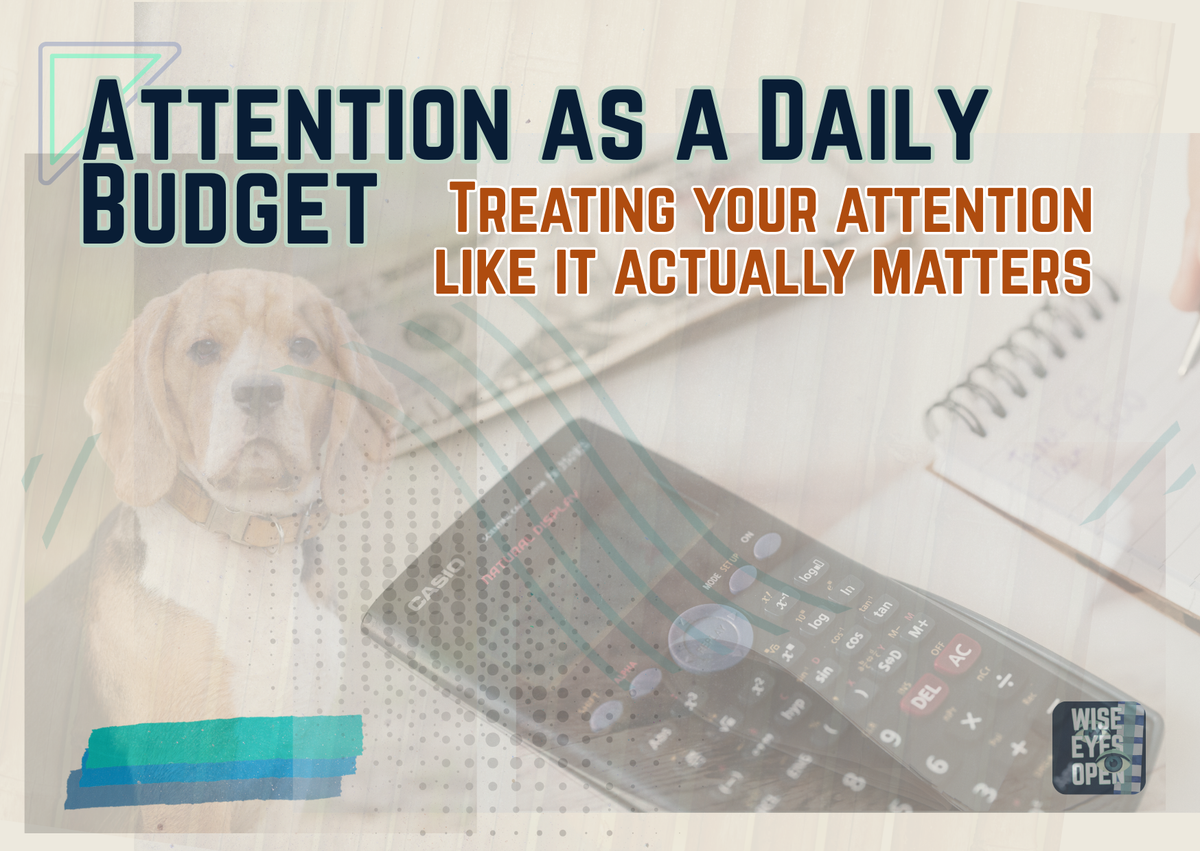
Attention as a Daily Budget
Treating your attention like it actually matters
We often talk about time as our most precious resource.
We schedule it. Protect it. Complain there isn't enough of it. But time is only meaningful because of what we do with it-and what we do with it is shaped entirely by where our attention goes.
Two hours with your phone on the table is not the same as two hours with your phone in another room. Same time. Completely different experience.
If you think of attention as a daily budget, certain things become clearer.
Every notification, every headline, every "quick check" is a small spend. Not always a bad one, but a spend nonetheless.
By afternoon, many of us have already spent the bulk of our attention on fragments: micro-decisions, half-read posts, background anxiety about everything we've just consumed.
Then we look at the things that actually matter-the work that needs focus, the person we want to be present with, the project we keep putting off-and we try to "find time" for them, without noticing that it's attention we've run out of.
When you start treating attention as a budget, a few things shift:
You become choosier about what earns your focus.
You structure your day around your best work, not around what's urgent.
You begin to see certain forms of media not as "breaks" but as costs.
None of this means cutting out joy or spontaneity. It just means recognising that your attention is already being bought and sold-often without your consent-and deciding to be more involved in the transaction.
You don't have to optimise every minute. You don't need a perfectly crafted routine.